Innovation Plan Update
Throughout the Applied Digital Learning (ADL) program, my innovation project has focused on solving a problem I encounter on a daily basis in my teaching practice. Specifically, my project examines how technology can support students in a non-varsity band setting as they learn to perform with accurate individual and ensemble intonation within and between musical lines. Instead of focusing on a single digital tool, this innovation emphasizes formative assessment practices supported by accessible technology. These practices help students become more independent, improve individual and ensemble intonation, and make feedback more sustainable for the teacher.
The problem of practice guiding this work is the challenge of providing frequent, meaningful, and actionable feedback in a non-varsity band classroom without increasing teacher workload or instructional burnout. In many instrumental ensemble classrooms, feedback is time-intensive and often limited to whole-group instruction, making it difficult to address individual student needs consistently. This innovation seeks to address that gap by designing a formative assessment system that allows students to engage in self-assessment and peer-supported learning using simple, scalable tools.
Over the course of the program, this innovation project has evolved from an initial idea focused on improving student performance to a more refined emphasis on sustainability, feasibility, and system-level design. The work has been informed by multiple literature reviews, action research planning, and early implementation efforts, including the use of individual tuners and microphone clips to support formative assessment during daily rehearsals. Together, these components represent an ongoing, iterative approach to innovation grounded in real classroom constraints and professional practice. This update is intended for educators and instructional leaders interested in sustainable assessment systems within performance-based classrooms.
Innovation Overview and Project Framing
To clearly communicate the scope and purpose of this innovation, I developed a comprehensive overview video that explains the problem of practice, intended outcomes, and system-level design of the project. Rather than presenting the innovation solely through written documentation, this overview was designed to articulate the rationale, sustainability focus, and long-term implementation strategy in a way that is accessible to educators and instructional leaders.
The video outlines the core challenge of providing meaningful, sustainable formative feedback in a non-varsity band setting and explains how the project evolved from a tool-focused idea to a feedback system grounded in feasibility and instructional reality. This artifact serves as the foundational framing for the entire innovation process and reflects my commitment to communicating educational ideas clearly and practically.
Literature Review
Multiple literature reviews informed the evolution of the innovation project. Early reviews explored formative assessment in music education and the use of technology in educational settings, while later reviews refined the focus toward system-level design, student autonomy, and sustainable feedback practices. This ongoing engagement with the literature helped clarify the theoretical grounding of the project and guided decisions about implementation and measurement.
Action Research Planning
Action research planning connected the innovation project to classroom practice by identifying measurable outcomes, data sources, and reflection strategies. This component emphasized the importance of designing research questions and data collection methods that are realistic, ethical, and manageable within daily instructional routines.
Implementation Components
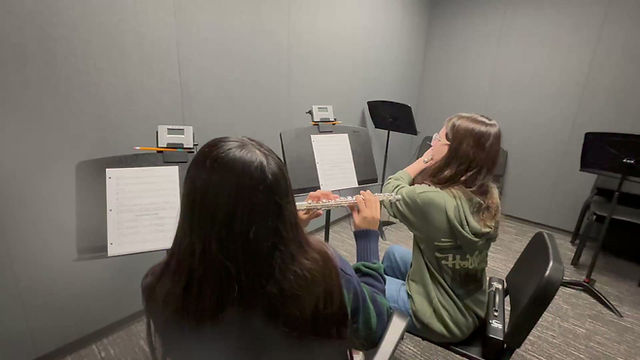
Early implementation efforts included the use of individual tuners and microphone clips to support formative assessment during daily rehearsals. These tools were intentionally selected for their accessibility and ease of use, allowing students to engage in self-assessment and peer-supported learning without increasing the cognitive load of the teacher.
Reflection and Refinement
Ongoing reflection has been a consistent component of the innovation project. Feedback from coursework, classroom observations, and implementation experiences has informed revisions to the project’s scope, timeline, and focus. Much like a concert cycle, this process reflects an understanding of innovation as continuous improvement rather than a single, finished product.
External Collaboration and Professional Dialogue
As the project evolved, I sought external professional insight to better understand the practical capabilities and design considerations of digital tuning tools. In February 2026, I met with the developer and coder of the TonalEnergy application to discuss how the tool’s pitch visualization, microphone input sensitivity, and real-time feedback systems might support student independence within ensemble settings.
While current implementation in my classroom relies on individual tuners and microphone clips due to budget constraints, this professional dialogue strengthened my understanding of how app-based tools could expand the formative assessment system in future iterations. The conversation also reinforced the importance of aligning tool design with classroom realities, ensuring that technological integration supports sustainability rather than adding complexity.
This engagement reflects the iterative nature of the innovation process and highlights the value of connecting classroom practice with tool-level design thinking.
Professional Learning Design
As the innovation matured, I designed a professional learning plan to translate the classroom-based formative assessment system into a scalable model for other educators. This professional development framework outlines how teachers can implement sustainable feedback routines using accessible tools while maintaining realistic workload expectations. The PD plan reflects a shift from isolated classroom experimentation to intentional dissemination and collaborative leadership, demonstrating how the innovation can extend beyond a single context.
Together, these components reflect a shift from tool-based thinking to system-level instructional design.


Students using individual tuners and tuner mics during class

Meeting with the development team behind TonalEnergy to explore how pitch visualization tools can support sustainable formative assessment in ensemble settings (February 2026).
Where I Am in the Innovation Process
At this stage of the Applied Digital Learning program, my innovation project is in an early implementation and refinement phase. The foundational components of the project, including the innovation proposal, literature reviews, and action research planning, have been completed and have provided a clear framework for implementation. While classroom implementation has been more limited than initially expected due to budget shortfalls, implementation has begun through the use of individual tuners and microphone clips to support formative assessment during daily rehearsals.
While the full impact of the innovation has not yet been measured, this timing is intentional. The project was designed with a realistic timeline that aligns with the instructional calendar and the natural progression of skill development in a non-varsity band setting. Data collection and analysis are planned to occur over an extended period, with quantifiable results expected on March 5, 2026, following the UIL Concert and Sightreading Evaluation. This approach allows sufficient time for students to develop consistency in their use of formative assessment tools and for instructional routines to stabilize before drawing conclusions using the UIL Concert and Sightreading rubric.
Several components of the project remain in progress. These include continued implementation of the formative assessment system, systematic data collection related to student intonation and engagement, and reflective analysis of how the system impacts both student learning and teacher workload. Ongoing lesson plan adjustment and teacher reflection will remain central as the project moves forward, ensuring that instructional decisions are guided by musical evidence rather than urgency or external pressure.
Overall, the project’s current status reflects a deliberate balance between action and reflection. Rather than rushing toward completion, the innovation is being developed in a way that prioritizes sustainability, instructional feasibility, and meaningful outcomes for both students and teachers.
Implementation Evidence: Formative Assessment in Practice
The following clips illustrate early implementation of tuner-based formative assessment routines. The first video demonstrates baseline pitch instability. The second demonstrates improved intonation following structured self-assessment using individual tuners.
Video 1: Baseline pitch instability prior to structured self-assessment.

Video 2: Improved pitch alignment following guided use of individual tuners.
Reflection on the Learning Process
Working through my innovation project across the Applied Digital Learning program significantly shaped how I understand learning design, collaboration, and leadership in practice. One of the most valuable outcomes of this process was learning how to navigate innovation within real constraints, including time, resources, institutional expectations, and collaborative structures.
What Worked
One of the most effective aspects of this innovation process was translating formative assessment theory into a structured, visible system within my classroom. Rather than keeping feedback practices conceptual, I intentionally embedded self-assessment routines into daily rehearsal structures and organized supporting materials through a Canvas-based class page. This allowed students to access clear expectations, visual supports, and consistent feedback structures in a centralized location.
Designing and refining this system required me to move beyond isolated instructional adjustments and instead think about how feedback routines are introduced, practiced, and normalized over time. The use of Canvas as a learning management system helped make the formative assessment system transparent and repeatable, reducing confusion and reinforcing independence. As a result, students were better able to engage with tuning routines consistently, and I was able to support feedback processes more efficiently without increasing instructional strain.
The class page that houses these formative assessment structures can be viewed here.
What Did Not Work
One of the primary challenges in implementing this innovation was navigating budget limitations and resource constraints. While the original vision of the project included app-based tools and broader device access, funding realities required a significant adjustment to the implementation plan. Access to classroom technology was more limited than anticipated, which delayed certain components of the system and required a reconsideration of how feedback tools could be integrated sustainably.
This constraint initially felt like a barrier. However, it ultimately clarified the core purpose of the innovation. Rather than centering the work on a specific application, the focus shifted toward designing a feedback structure that could function regardless of the tool used. The necessity of adapting to budget limitations reinforced the importance of feasibility, scalability, and long-term sustainability in innovation design.
Key Lessons Learned
One of the most significant lessons from this innovation process is that meaningful change begins with system design rather than tool adoption. While technology can enhance feedback structures, the effectiveness of formative assessment depends on how clearly routines are established, modeled, and sustained over time. This shift in thinking is reflected not only in my classroom implementation, but also in my professional writing, including my article Building Musical Independence Through Formative Assessment, where I further explore how structured feedback systems support long-term student autonomy. This experience reinforced that innovation must prioritize clarity, repeatability, and instructional feasibility before expanding to additional tools.
A second key lesson was the productive role of constraints. Budget limitations required a reevaluation of the original implementation plan and forced a clearer articulation of the project’s core purpose. Rather than centering the innovation on a specific application, the process clarified that the true goal was to design a sustainable feedback loop that could function across multiple platforms and resource levels.
Deepening My Understanding of Formative Assessment Design
In addition to lessons about collaboration, this innovation process significantly reshaped how I understand formative assessment in performance-based classrooms. At the beginning of the project, I was primarily focused on improving student intonation through access to digital tools. Over time, however, my thinking evolved from tool selection to system design. I began to see formative assessment not as an add-on to instruction, but as an embedded structure that must be intentionally scaffolded, made into a routine, and aligned with realistic classroom constraints.
Budget limitations and access challenges also changed my approach in productive ways. Rather than viewing the lack of iPads or app-based tools as a setback, I was challenged to clarify the core purpose of the innovation. This constraint forced me to ask whether the goal was the technology itself or the feedback loop it supported. As a result, the project shifted from emphasizing a specific app to prioritizing sustainable feedback structures that could function across multiple tools.
One of the most surprising aspects of early implementation was how quickly students adapted to self-assessment routines when expectations were clear and consistent. While I anticipated resistance or over-reliance on teacher validation, students demonstrated increased independence when given structured opportunities to monitor their own pitch accuracy. This reinforced the importance of intentional design over novelty and confirmed that the power of the innovation lies in the system, not the device.
Impact on My Leadership and Innovation Practice
As a result of this process, I now approach innovation with greater clarity about when collaboration is beneficial and when independent work is more appropriate. In future innovation projects, I plan to prioritize structures that support accountability, respect professional context, and minimize unnecessary friction. These insights will directly inform how I design professional learning, lead collaborative initiatives, and support sustainable innovation efforts.
Promotion and Communication of the Innovation Project
As this innovation project continues to develop, I plan to communicate and share the work with audiences who may benefit from its design and outcomes. Because the project is grounded in real classroom practice, its value lies not only in measurable outcomes, but also in the process and decision-making behind the implementation.
Within my own professional context, I plan to share the innovation with fine arts colleagues through informal conversations, collaborative planning, and professional learning opportunities. I have also reached out to my regional Education Service Center to offer this work as professional development during summer 2026. The focus of this outreach will be on how a technology-supported formative assessment system can support student independence while maintaining realistic expectations for teacher workload. By framing the project as a system rather than a single tool, I hope to encourage thoughtful adoption and adaptation rather than one-size-fits-all implementation.
Beyond my immediate teaching context, this work will continue to be documented and shared through my professional ePortfolio as part of my ongoing professional learning narrative. The innovation project will also inform future conference presentations, professional development sessions, and collaborative conversations with educators who are exploring sustainable approaches to assessment and feedback. Additionally, this work has begun to shape my thinking around potential dissertation research focused on sustainability, feedback systems, and teacher workload. By openly sharing both successes and challenges, I aim to contribute to a broader dialogue around meaningful and sustainable innovation in education.
Knowing What I Know Now: Looking Ahead to Future Innovation Work
Reflecting on the full innovation process, there are several key decisions I would approach differently if I were beginning this project again. One of the most significant changes would be starting with measurement and data collection planning earlier in the process. While the project was intentionally designed to evolve over time, clarifying data sources, benchmarks, and timelines at the outset would have reduced uncertainty and strengthened alignment between the innovation design and intended outcomes.
I would also place stronger guardrails around collaboration and scope. This project reinforced the importance of protecting ownership, clarity, and accountability within collaborative structures. In future innovation work, I would be more intentional about defining roles, decision-making authority, and expectations upfront to ensure that collaboration supports progress rather than slowing it. Additionally, I would continue to prioritize feasibility by limiting the number of variables introduced during early implementation phases.
The most important takeaway from this innovation experience is the value of designing systems rather than relying on isolated tools. This lesson will directly inform my approach to future innovation projects. Moving forward, I plan to apply the same system-level thinking by identifying a clear problem of practice, designing sustainable feedback or support structures, and aligning implementation with real classroom constraints. I will also continue to view innovation as an iterative process that values reflection, adjustment, and long-term impact over speed or novelty.
Ultimately, this experience has reshaped how I approach innovation, leadership, and professional learning. The skills developed through this project, including reflective decision-making, intentional design, and sustainability-focused thinking, will guide my future work as I continue to explore innovative practices that meaningfully support both student learning and teacher well-being.
References